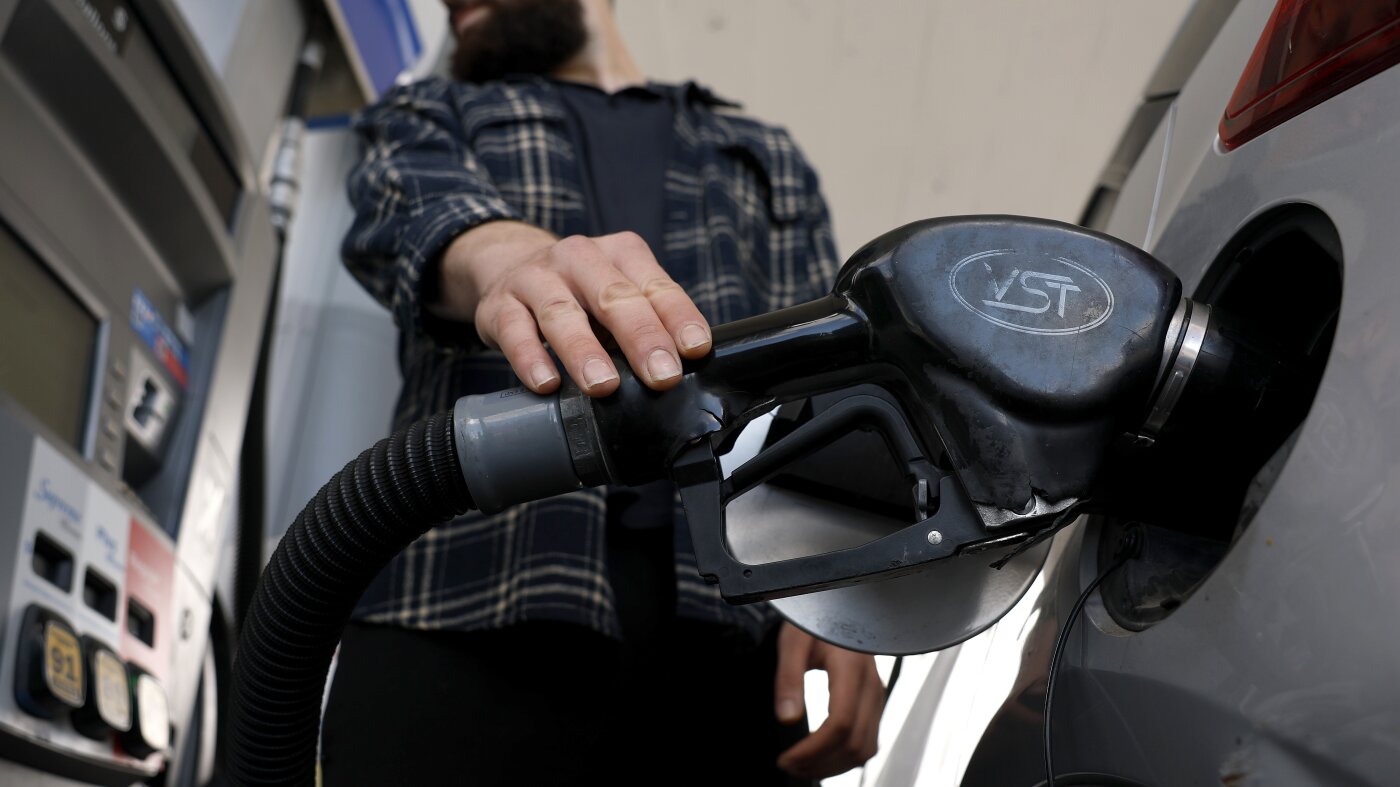
trend overview We provide financial insights into stock performance, earnings expectations, and market sentiment shifts. As the national average for a gallon of gasoline reaches $4.55 heading into one of the busiest travel weekends, consumers are evaluating ways to cut fuel costs. Options such as driving slower, switching to electric vehicles, or avoiding driving altogether may offer relief. This trend could influence broader energy demand and consumer spending patterns.
Live News
trend overview Many traders have started integrating multiple data sources into their decision-making process. While some focus solely on equities, others include commodities, futures, and forex data to broaden their understanding. This multi-layered approach helps reduce uncertainty and improve confidence in trade execution. Cross-asset correlation analysis often reveals hidden dependencies between markets. For example, fluctuations in oil prices can have a direct impact on energy equities, while currency shifts influence multinational corporate earnings. Professionals leverage these relationships to enhance portfolio resilience and exploit arbitrage opportunities. The national average for a gallon of gasoline stands at $4.55, according to recent data, as America prepares for one of the busiest travel weekends of the year. With prices remaining elevated, consumers are exploring various methods to reduce fuel expenses. Among the suggested approaches are driving at slower speeds to improve fuel efficiency, considering electric vehicle (EV) adoption, or curtailing travel entirely when possible. These strategies reflect a broader consumer response to sustained high fuel costs, which may affect travel behavior and household budgets. The timing of this price level—coinciding with peak travel demand—highlights the tension between necessary mobility and rising expenses. Drivers are reportedly adjusting habits, such as avoiding rapid acceleration and reducing idling, while also evaluating longer-term shifts like purchasing more fuel-efficient or electric vehicles. Public transit and carpooling are also being mentioned as alternatives, though their availability varies by region. The situation underscores the immediate financial pressure on households and the potential for lasting changes in transportation choices.
Rising Gas Prices Prompt Consumer Strategies: Slower Driving, Electric Vehicles, and Reduced Travel Access to multiple perspectives can help refine investment strategies. Traders who consult different data sources often avoid relying on a single signal, reducing the risk of following false trends.Monitoring global market interconnections is increasingly important in today’s economy. Events in one country often ripple across continents, affecting indices, currencies, and commodities elsewhere. Understanding these linkages can help investors anticipate market reactions and adjust their strategies proactively.Rising Gas Prices Prompt Consumer Strategies: Slower Driving, Electric Vehicles, and Reduced Travel Real-time updates are particularly valuable during periods of high volatility. They allow traders to adjust strategies quickly as new information becomes available.The integration of multiple datasets enables investors to see patterns that might not be visible in isolation. Cross-referencing information improves analytical depth.
Key Highlights
trend overview Monitoring global market interconnections is increasingly important in today’s economy. Events in one country often ripple across continents, affecting indices, currencies, and commodities elsewhere. Understanding these linkages can help investors anticipate market reactions and adjust their strategies proactively. Experts often combine real-time analytics with historical benchmarks. Comparing current price behavior to historical norms, adjusted for economic context, allows for a more nuanced interpretation of market conditions and enhances decision-making accuracy. The $4.55 average gasoline price may have several implications for the broader economy and sector dynamics. First, historically elevated fuel costs could dampen discretionary spending in other areas as consumers allocate more income to transportation. This might particularly affect retail and hospitality sectors dependent on travel and leisure. Second, the price level could accelerate interest in electric vehicles and fuel-saving technologies, potentially boosting EV adoption rates. However, the pace of transition would likely depend on vehicle availability, charging infrastructure, and incentives. Third, higher gas prices may influence oil demand expectations, possibly leading to shifts in refinery output and inventory strategies. Market participants could watch for changes in driving patterns, such as reduced vehicle miles traveled, which might temper crude oil demand growth. These factors collectively suggest that consumer behavior in response to gas prices warrants close monitoring for signals of evolving energy consumption trends.
Rising Gas Prices Prompt Consumer Strategies: Slower Driving, Electric Vehicles, and Reduced Travel Investors often experiment with different analytical methods before finding the approach that suits them best. What works for one trader may not work for another, highlighting the importance of personalization in strategy design.Predicting market reversals requires a combination of technical insight and economic awareness. Experts often look for confluence between overextended technical indicators, volume spikes, and macroeconomic triggers to anticipate potential trend changes.Rising Gas Prices Prompt Consumer Strategies: Slower Driving, Electric Vehicles, and Reduced Travel Historical precedent combined with forward-looking models forms the basis for strategic planning. Experts leverage patterns while remaining adaptive, recognizing that markets evolve and that no model can fully replace contextual judgment.Cross-market analysis can reveal opportunities that might otherwise be overlooked. Observing relationships between assets can provide valuable signals.
Expert Insights
trend overview Real-time data can reveal early signals in volatile markets. Quick action may yield better outcomes, particularly for short-term positions. Monitoring global indices can help identify shifts in overall sentiment. These changes often influence individual stocks. From an investment perspective, the current gas price environment presents both opportunities and risks across various sectors. Energy companies might benefit from elevated margins if crude costs remain favorable, but sustained high prices could eventually dampen demand and consumption. The automotive industry could see increased interest in electric and hybrid models, though near-term adoption may be constrained by supply chains and upfront costs. Consumer discretionary firms tied to travel, such as airlines and hotels, might face headwinds from reduced trip frequency or shorter distances. Additionally, utility and renewable energy companies could be well-positioned as consumers seek alternatives to gasoline. However, these trends are uncertain and depend on broader economic conditions, regulatory policies, and technological advancements. Investors are advised to consider these factors cautiously, as market reactions may vary. This analysis is for informational purposes only and does not constitute investment advice.
Rising Gas Prices Prompt Consumer Strategies: Slower Driving, Electric Vehicles, and Reduced Travel Access to multiple indicators helps confirm signals and reduce false positives. Traders often look for alignment between different metrics before acting.Some traders use futures data to anticipate movements in related markets. This approach helps them stay ahead of broader trends.Rising Gas Prices Prompt Consumer Strategies: Slower Driving, Electric Vehicles, and Reduced Travel Quantitative models are powerful tools, yet human oversight remains essential. Algorithms can process vast datasets efficiently, but interpreting anomalies and adjusting for unforeseen events requires professional judgment. Combining automated analytics with expert evaluation ensures more reliable outcomes.Stress-testing investment strategies under extreme conditions is a hallmark of professional discipline. By modeling worst-case scenarios, experts ensure capital preservation and identify opportunities for hedging and risk mitigation.