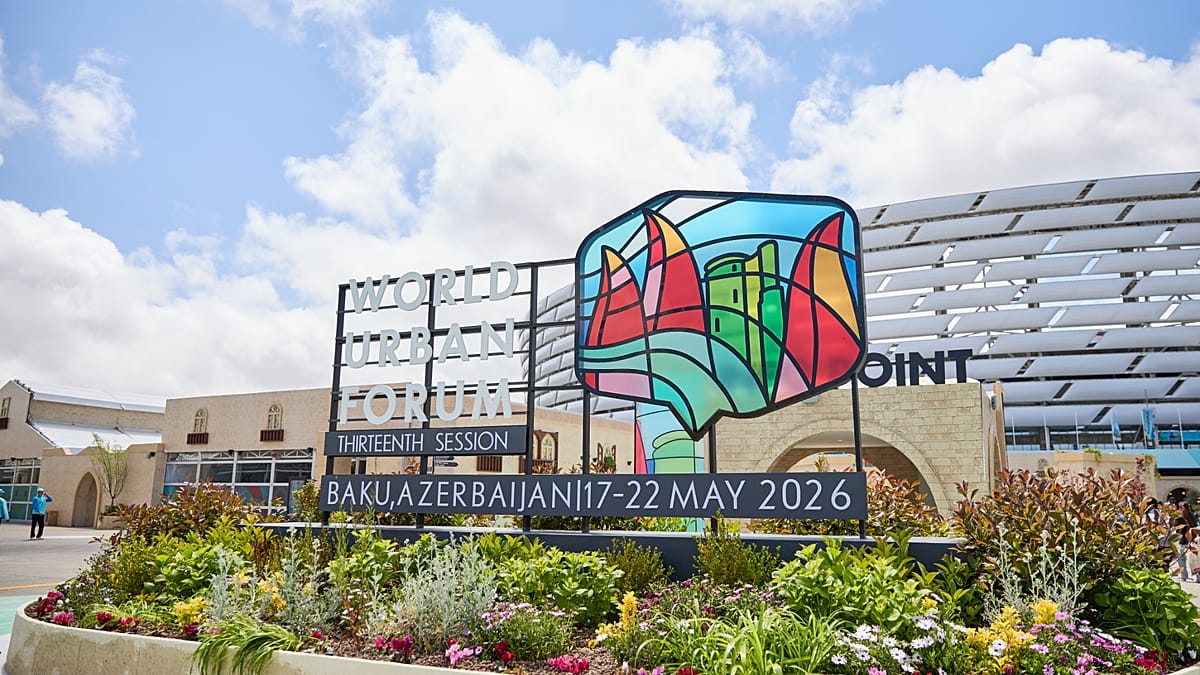
WUF13 Latin America Housing Climate - highlights evolving market conditions, trading behavior, and financial developments. At the World Urban Forum 13 (WUF13), Latin American leaders called for new housing finance models, stronger private investment, and climate-resilient urban development. The discussions highlight a potential shift in regional infrastructure priorities, with implications for investors in real estate, green bonds, and sustainable construction.
Live News
WUF13 Latin America Housing Climate - highlights evolving market conditions, trading behavior, and financial developments. Access to reliable, continuous market data is becoming a standard among active investors. It allows them to respond promptly to sudden shifts, whether in stock prices, energy markets, or agricultural commodities. The combination of speed and context often distinguishes successful traders from the rest. During the World Urban Forum 13 (WUF13), hosted by the United Nations Human Settlements Programme (UN-Habitat), Latin American leaders and urban policymakers emphasized the urgent need to address the region’s housing deficit and climate vulnerabilities. According to reports from the forum, leaders called for new housing finance models that could lower barriers to affordable housing, as well as stronger private investment to bridge funding gaps. The agenda also stressed climate-resilient urban development, recognizing that many Latin American cities face rising risks from extreme weather, sea-level rise, and infrastructure strain. The forum brought together government officials, financial institutions, and development experts to discuss practical solutions tailored to the region’s unique challenges. Delegates highlighted that traditional public financing alone is insufficient to meet the scale of need, and that innovative instruments—such as blended finance, green bonds, and public-private partnerships—could play a pivotal role. The calls for reform arrive as Latin America’s urban population continues to grow, with an estimated 80% of the region’s inhabitants now living in cities, according to UN data.
Latin American Leaders at WUF13 Push for Housing Finance Reforms and Climate-Resilient Urban Investment Analyzing trading volume alongside price movements provides a deeper understanding of market behavior. High volume often validates trends, while low volume may signal weakness. Combining these insights helps traders distinguish between genuine shifts and temporary anomalies.Real-time updates are particularly valuable during periods of high volatility. They allow traders to adjust strategies quickly as new information becomes available.Latin American Leaders at WUF13 Push for Housing Finance Reforms and Climate-Resilient Urban Investment Understanding cross-border capital flows informs currency and equity exposure. International investment trends can shift rapidly, affecting asset prices and creating both risk and opportunity for globally diversified portfolios.Real-time monitoring allows investors to identify anomalies quickly. Unusual price movements or volumes can indicate opportunities or risks before they become apparent.
Key Highlights
WUF13 Latin America Housing Climate - highlights evolving market conditions, trading behavior, and financial developments. Some investors find that using dashboards with aggregated market data helps streamline analysis. Instead of jumping between platforms, they can view multiple asset classes in one interface. This not only saves time but also highlights correlations that might otherwise go unnoticed. The discussions at WUF13 carry meaningful implications for financial markets and infrastructure investment in Latin America. New housing finance models may open opportunities for banks, impact investors, and real estate developers to participate in affordable housing projects, particularly through instruments that reduce risk for private capital. The emphasis on private investment suggests that governments may look to create more favorable regulatory environments to attract funds, which could benefit sectors such as construction materials, homebuilding, and mortgage lending. The focus on climate resilience points to potential growth in green infrastructure spending—ranging from sustainable drainage systems to energy-efficient buildings. This could increase demand for environmental, social, and governance (ESG) investment products in the region, particularly green bonds and resilience funds. However, the pace and scale of any shift would likely depend on national policy reforms and the ability to structure bankable projects. Investors may want to monitor how countries like Brazil, Mexico, Colombia, and Chile respond to these calls in their upcoming urban planning and budget cycles.
Latin American Leaders at WUF13 Push for Housing Finance Reforms and Climate-Resilient Urban Investment Many investors now incorporate global news and macroeconomic indicators into their market analysis. Events affecting energy, metals, or agriculture can influence equities indirectly, making comprehensive awareness critical.Diversifying data sources can help reduce bias in analysis. Relying on a single perspective may lead to incomplete or misleading conclusions.Latin American Leaders at WUF13 Push for Housing Finance Reforms and Climate-Resilient Urban Investment Market participants frequently adjust their analytical approach based on changing conditions. Flexibility is often essential in dynamic environments.Diversifying the sources of information helps reduce bias and prevent overreliance on a single perspective. Investors who combine data from exchanges, news outlets, analyst reports, and social sentiment are often better positioned to make balanced decisions that account for both opportunities and risks.
Expert Insights
WUF13 Latin America Housing Climate - highlights evolving market conditions, trading behavior, and financial developments. Maintaining detailed trade records is a hallmark of disciplined investing. Reviewing historical performance enables professionals to identify successful strategies, understand market responses, and refine models for future trades. Continuous learning ensures adaptive and informed decision-making. From an investment perspective, the outcomes of WUF13 could influence capital flows into Latin American urban development over the medium term. The push for new housing finance models may encourage international development finance institutions and multilateral lenders to expand their exposure in the region, potentially crowding in private capital. The climate resilience agenda aligns with global trends in sustainable finance, which might see Latin America as a frontier for green bonds tied to urban adaptation projects. Still, significant hurdles remain—including political instability, inflation, and currency volatility—that could temper the speed of implementation. There is no guarantee that the rhetoric from the forum will translate into concrete projects or regulatory changes. Investors would likely need to assess each country’s specific policy commitments and fiscal capacity before reallocating capital. Broader trends in urbanization, climate risk, and housing affordability continue to make Latin America a region to watch for long-term infrastructure plays. Analysts note that successful execution would require coordinated efforts across public, private, and multilateral stakeholders. Disclaimer: This analysis is for informational purposes only and does not constitute investment advice.
Latin American Leaders at WUF13 Push for Housing Finance Reforms and Climate-Resilient Urban Investment Some traders use alerts strategically to reduce screen time. By focusing only on critical thresholds, they balance efficiency with responsiveness.Real-time updates can help identify breakout opportunities. Quick action is often required to capitalize on such movements.Latin American Leaders at WUF13 Push for Housing Finance Reforms and Climate-Resilient Urban Investment Investors often rely on a combination of real-time data and historical context to form a balanced view of the market. By comparing current movements with past behavior, they can better understand whether a trend is sustainable or temporary.Market participants often refine their approach over time. Experience teaches them which indicators are most reliable for their style.