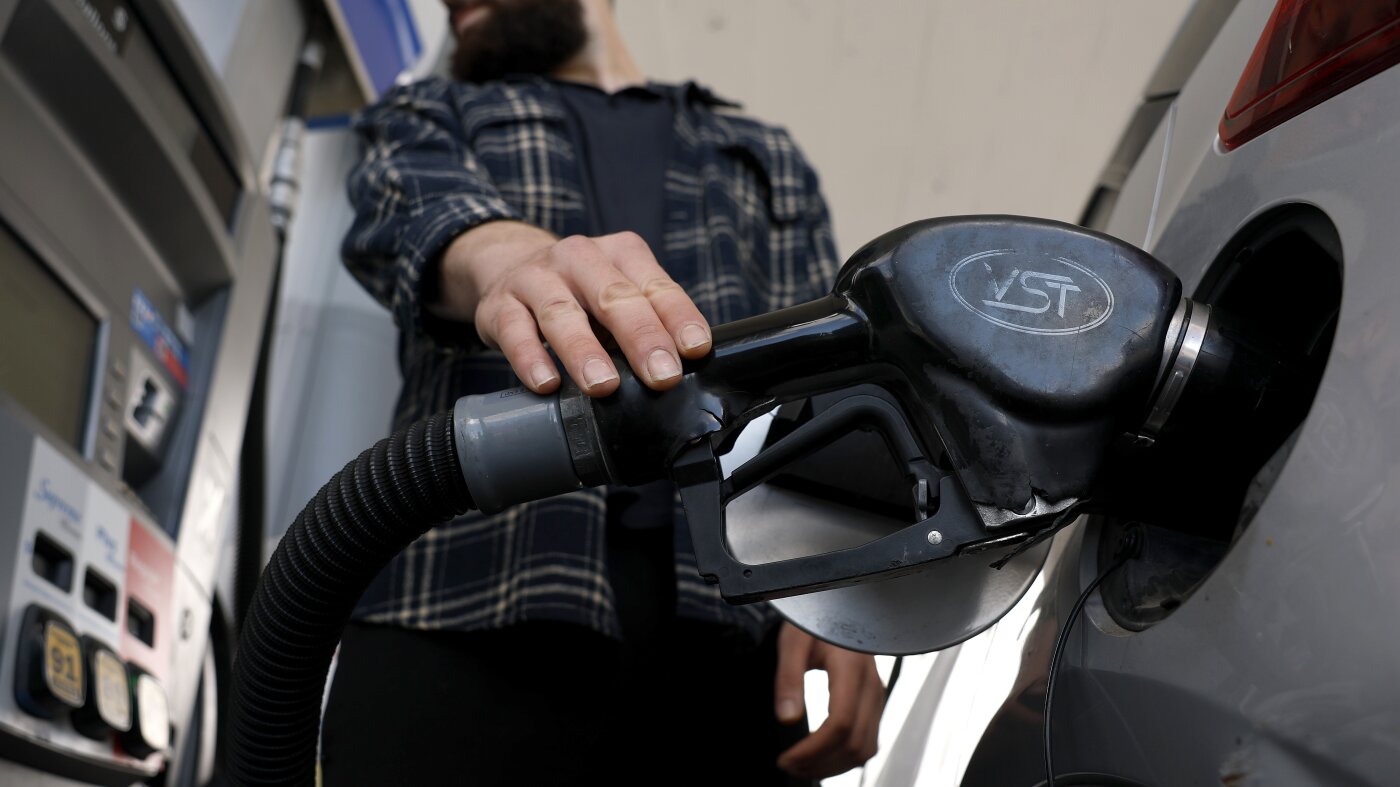
review metrics Our service focuses on delivering stock research, market commentary, and earnings interpretation to help investors follow key financial events and company performance. As the national average for a gallon of gasoline reaches $4.55 heading into one of the busiest travel weekends, consumers are evaluating ways to cut fuel costs. Options such as driving slower, switching to electric vehicles, or avoiding driving altogether may offer relief. This trend could influence broader energy demand and consumer spending patterns.
Live News
review metrics Real-time monitoring of multiple asset classes can help traders manage risk more effectively. By understanding how commodities, currencies, and equities interact, investors can create hedging strategies or adjust their positions quickly. Observing correlations across asset classes can improve hedging strategies. Traders may adjust positions in one market to offset risk in another. The national average for a gallon of gasoline stands at $4.55, according to recent data, as America prepares for one of the busiest travel weekends of the year. With prices remaining elevated, consumers are exploring various methods to reduce fuel expenses. Among the suggested approaches are driving at slower speeds to improve fuel efficiency, considering electric vehicle (EV) adoption, or curtailing travel entirely when possible. These strategies reflect a broader consumer response to sustained high fuel costs, which may affect travel behavior and household budgets. The timing of this price level—coinciding with peak travel demand—highlights the tension between necessary mobility and rising expenses. Drivers are reportedly adjusting habits, such as avoiding rapid acceleration and reducing idling, while also evaluating longer-term shifts like purchasing more fuel-efficient or electric vehicles. Public transit and carpooling are also being mentioned as alternatives, though their availability varies by region. The situation underscores the immediate financial pressure on households and the potential for lasting changes in transportation choices.
Rising Gas Prices Prompt Consumer Strategies: Slower Driving, Electric Vehicles, and Reduced Travel Monitoring market liquidity is critical for understanding price stability and transaction costs. Thinly traded assets can exhibit exaggerated volatility, making timing and order placement particularly important. Professional investors assess liquidity alongside volume trends to optimize execution strategies.Monitoring global indices can help identify shifts in overall sentiment. These changes often influence individual stocks.Rising Gas Prices Prompt Consumer Strategies: Slower Driving, Electric Vehicles, and Reduced Travel Many traders use a combination of indicators to confirm trends. Alignment between multiple signals increases confidence in decisions.Combining technical indicators with broader market data can enhance decision-making. Each method provides a different perspective on price behavior.
Key Highlights
review metrics Using multiple analysis tools enhances confidence in decisions. Relying on both technical charts and fundamental insights reduces the chance of acting on incomplete or misleading information. Some investors integrate technical signals with fundamental analysis. The combination helps balance short-term opportunities with long-term portfolio health. The $4.55 average gasoline price may have several implications for the broader economy and sector dynamics. First, historically elevated fuel costs could dampen discretionary spending in other areas as consumers allocate more income to transportation. This might particularly affect retail and hospitality sectors dependent on travel and leisure. Second, the price level could accelerate interest in electric vehicles and fuel-saving technologies, potentially boosting EV adoption rates. However, the pace of transition would likely depend on vehicle availability, charging infrastructure, and incentives. Third, higher gas prices may influence oil demand expectations, possibly leading to shifts in refinery output and inventory strategies. Market participants could watch for changes in driving patterns, such as reduced vehicle miles traveled, which might temper crude oil demand growth. These factors collectively suggest that consumer behavior in response to gas prices warrants close monitoring for signals of evolving energy consumption trends.
Rising Gas Prices Prompt Consumer Strategies: Slower Driving, Electric Vehicles, and Reduced Travel Some investors focus on momentum-based strategies. Real-time updates allow them to detect accelerating trends before others.Real-time data analysis is indispensable in today’s fast-moving markets. Access to live updates on stock indices, futures, and commodity prices enables precise timing for entries and exits. Coupling this with predictive modeling ensures that investment decisions are both responsive and strategically grounded.Rising Gas Prices Prompt Consumer Strategies: Slower Driving, Electric Vehicles, and Reduced Travel While algorithms and AI tools are increasingly prevalent, human oversight remains essential. Automated models may fail to capture subtle nuances in sentiment, policy shifts, or unexpected events. Integrating data-driven insights with experienced judgment produces more reliable outcomes.Many traders use a combination of indicators to confirm trends. Alignment between multiple signals increases confidence in decisions.
Expert Insights
review metrics Historical volatility is often combined with live data to assess risk-adjusted returns. This provides a more complete picture of potential investment outcomes. Combining technical indicators with broader market data can enhance decision-making. Each method provides a different perspective on price behavior. From an investment perspective, the current gas price environment presents both opportunities and risks across various sectors. Energy companies might benefit from elevated margins if crude costs remain favorable, but sustained high prices could eventually dampen demand and consumption. The automotive industry could see increased interest in electric and hybrid models, though near-term adoption may be constrained by supply chains and upfront costs. Consumer discretionary firms tied to travel, such as airlines and hotels, might face headwinds from reduced trip frequency or shorter distances. Additionally, utility and renewable energy companies could be well-positioned as consumers seek alternatives to gasoline. However, these trends are uncertain and depend on broader economic conditions, regulatory policies, and technological advancements. Investors are advised to consider these factors cautiously, as market reactions may vary. This analysis is for informational purposes only and does not constitute investment advice.
Rising Gas Prices Prompt Consumer Strategies: Slower Driving, Electric Vehicles, and Reduced Travel Data platforms often provide customizable features. This allows users to tailor their experience to their needs.Monitoring multiple timeframes provides a more comprehensive view of the market. Short-term and long-term trends often differ.Rising Gas Prices Prompt Consumer Strategies: Slower Driving, Electric Vehicles, and Reduced Travel Sector rotation analysis is a valuable tool for capturing market cycles. By observing which sectors outperform during specific macro conditions, professionals can strategically allocate capital to capitalize on emerging trends while mitigating potential losses in underperforming areas.Risk management is often overlooked by beginner investors who focus solely on potential gains. Understanding how much capital to allocate, setting stop-loss levels, and preparing for adverse scenarios are all essential practices that protect portfolios and allow for sustainable growth even in volatile conditions.